

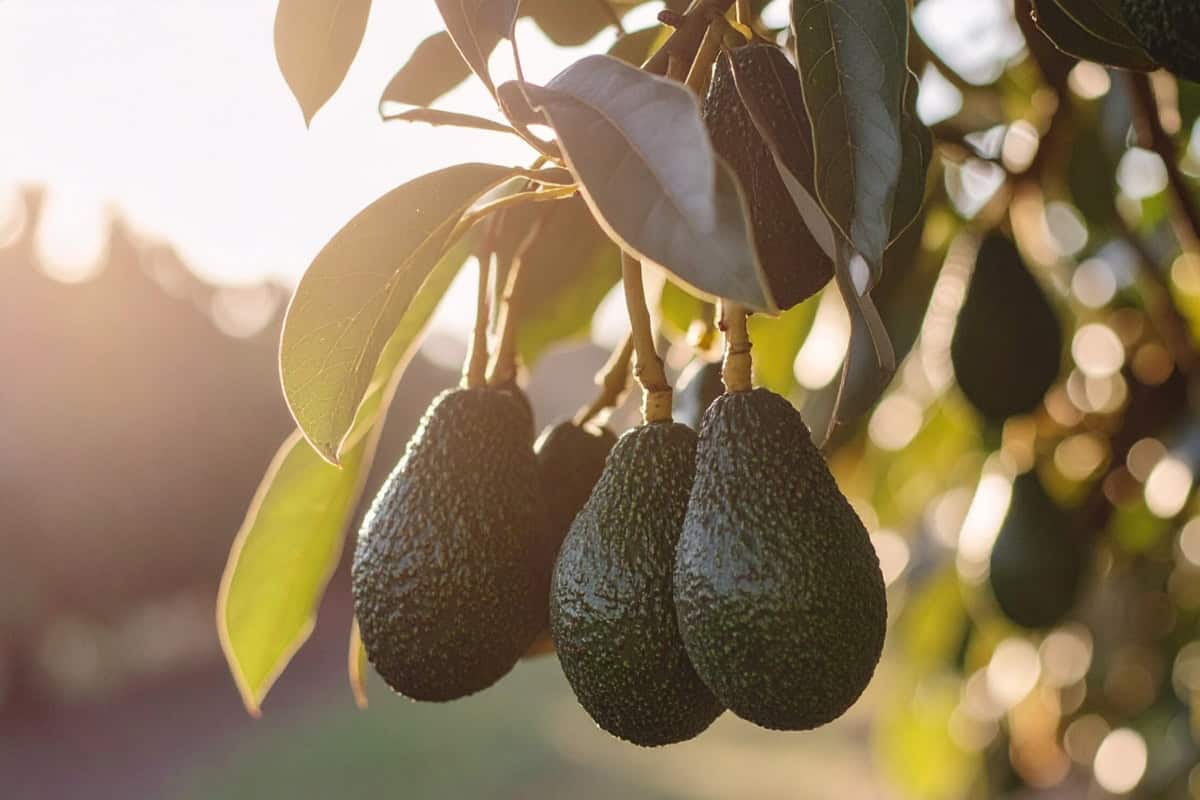
Great news! That slippery brown pit you found in the middle of your avocado is not trash — it’s potential. Inside that seed is everything you and nature need to grow an avocado tree.
Growing an avocado from a seed pit is one of the most beginner-friendly projects you can take on. It requires no special equipment, no greenhouse, no classes: just a little patience, a sunny windowsill, and a glass of water.
In this guide, we’ll cover:
- The right way to clean and peel your seed to speed up growth.
- The classic toothpick and baggie trick for germination
- Why cutting your baby tree in half is the key to a full, bushy plant.
- How to move your sprout to soil without shocking the roots.
What You’ll Need: Tools and Supplies
One of the best parts is that you probably already have most of these supplies — and if not, they’re very inexpensive. You don’t need grow lights, heat mats, or any special setup. Here’s a complete list of what you’ll need:
- A fresh avocado pit — from a ripe avocado
- 3–4 wooden toothpicks — to suspend the seed during germination
- A clear glass or jar — clear is best so you can watch the roots develop and know when to add and change the water
- Water — tap water is fine; if your water is heavily chlorinated, use bottled or filtered water
- A sunny windowsill — south or west-facing is ideal
- A 10 to 12-inch pot with drainage holes
- High-quality potting mix — ideally a humus-rich, well-draining blend.
- A water-soluble, balanced fertilizer — a balanced NPK ratio around 10-10-10
Step 1: How to Prepare and Plant an Avocado Seed
The first thing you need to know about how to plant an avocado seed is that preparation makes all the difference — a clean, correctly oriented pit gives you the best possible start.
Remove the Pit, Wash, and Peel
Start with a ripe avocado. It should be dark and give slightly when you squeeze it gently. Ripeness doesn’t affect germination, but it will be easier to remove the pit without damage.
Rinse the pit under warm water, using your fingers to clean off the flesh. Any remaining flesh can attract mold and bacteria, which can rot your seed.
Peel the thin, brown, papery skin off the pit to speed germination. Be careful not to nick the seed inside.
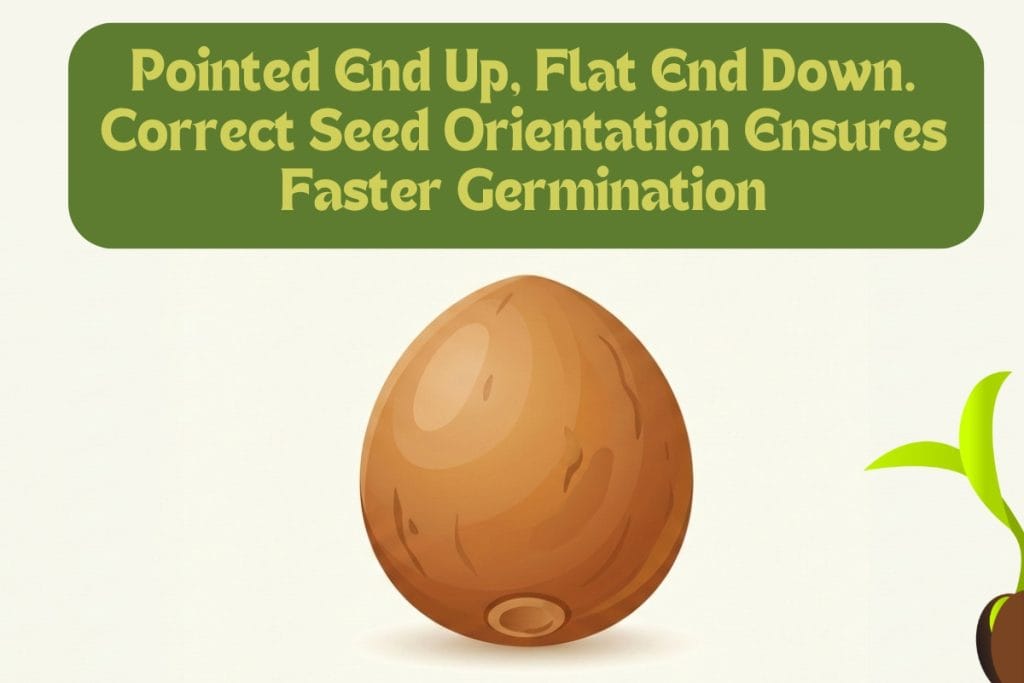
Identify the Orientation of the Seed
Look closely. One end is slightly more pointed, and the other is flatter, broader, and usually concave. The pointed end is the top (where the stem will emerge), and the flat end is the bottom (where the roots will grow).
It is important because suspending the seed upside-down will prevent germination or seriously delay it.
This orientation is critical, much like when you plant garlic cloves; it’s the secret to a successful sprout. I invite you to also read our guide on the 5 steps to grow garlic here.
Step 2: How to Germinate an Avocado Seed
Learning how to germinate an avocado seed is really just about giving it four things: warmth, moisture, light, and patience.
The Toothpick Method For Root Production
Take 3–4 wooden toothpicks and press them firmly into the middle of the avocado pit, angled slightly downward. Space them evenly around the circumference. Avoid crevices that are down the side of the seed, otherwise you might split your seed.
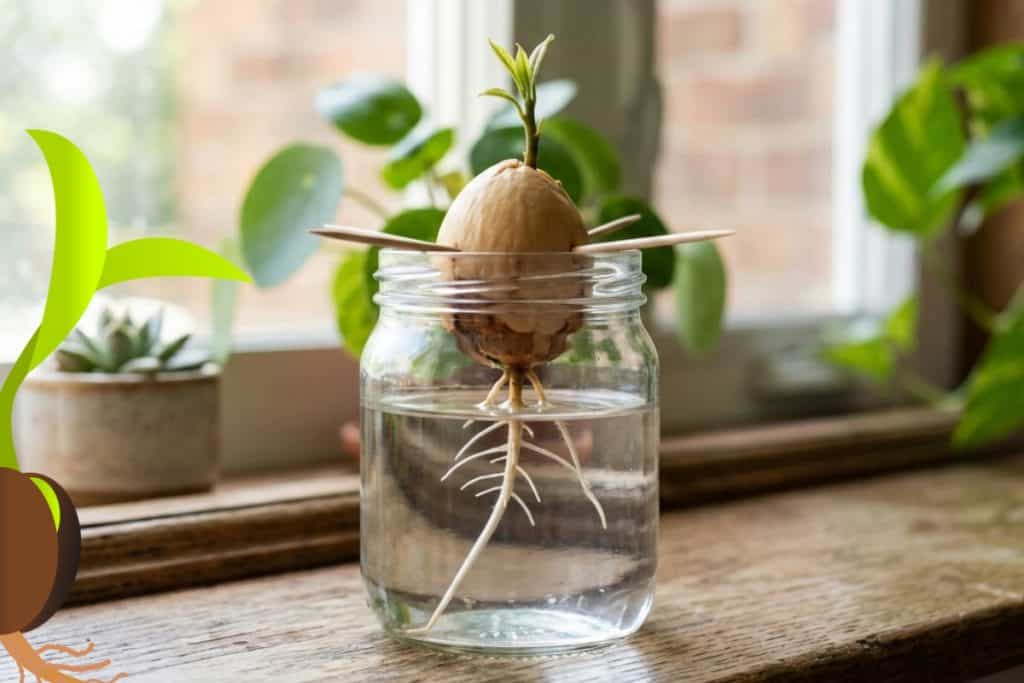
These toothpicks act as a scaffold, suspending the pit on the rim of your glass.
We want the bottom half of the seed to sit in water and the top half exposed to air. Fill your glass with room-temperature water to just above the flat bottom of the pit.
Set the glass in front of a sunny window. A south or west-facing window will receive the most sunlight throughout the day. The pit will crack and you should see a taproot within 2–8 weeks. You do not want it to dry out at any point once it appears.
Seed Maintenance Tips
- Change the water every 2–5 days to prevent bacteria or algae
- Keep the water level consistent, adding more as it evaporates so the base of the pit remains submerged
- Maintain a warm environment, ideally above 65°F
An Alternative Way to Sprout an Avocado Seed: The Plastic Bag and Paper Towel Method
The toothpick-and-water method is the most well-known way to germinate an avocado pit, and it works, but it isn’t the only option. If you’ve tried it without success, or simply want to experiment, the plastic bag and paper towel method is worth knowing about and has also proven highly effective.
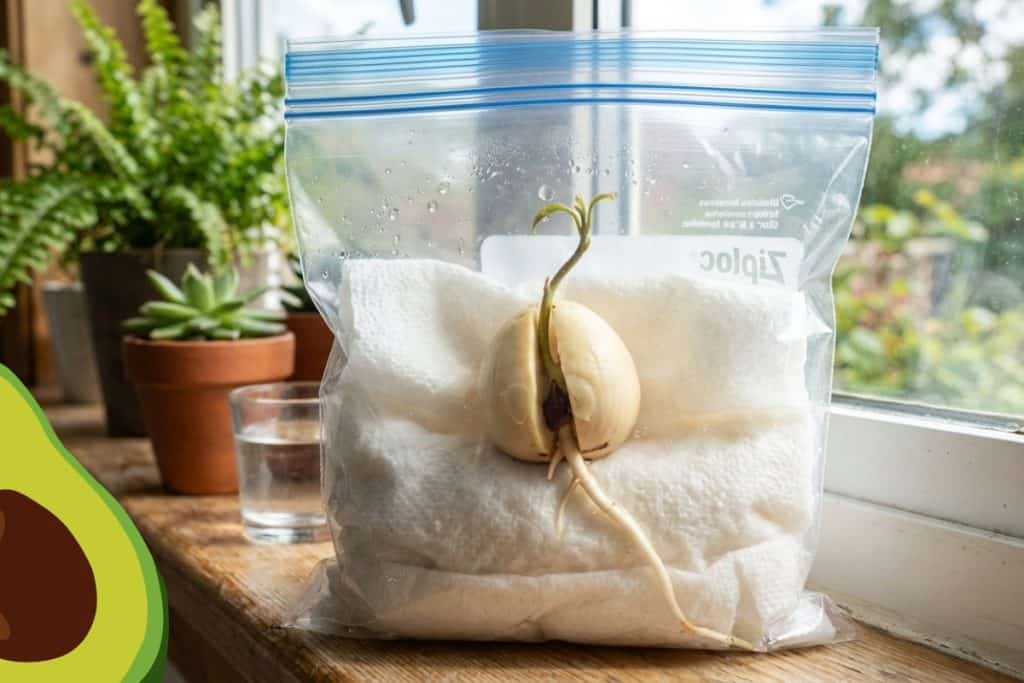
Clean your pit, then set it aside for a few days to allow the outer seed coat to dry out. Remove the papery coating, wrap the seed in a damp paper towel, then place it in a zip-lock bag with a little extra water, leaving some air inside before sealing.
- Prepare: Clean the pit and let it dry a few days.
- Wrap: Remove skin, wrap in damp paper towel, place in a bag with water.
- Seal: Seal the bag to create warmth and humidity.
- Monitor: Check regularly; transplant once a taproot appears.
The sealed bag creates a miniature greenhouse effect with increased warmth and humidity. The trapped air provides the oxygen the seed needs to germinate.
Check your seeds every few days. As opposed to the other technique, you transplant the pit to soil after you see a taproot.
Step 3: When and How to Prune Your Seedling
When your avocado sprout reaches about 12 inches tall, the instinct is to leave it alone and let it keep growing. It feels like you’re going backwards, but this is what will give you a fuller plant in the long run. Not cutting the plant back is the most common mistake new growers make.
Cut the stem to about 6 inches, just above a node. Cutting back, or pinching, the stem wakes up buds that force the plant to branch out and become bushy rather than tall and spindly. The result is a much stronger, fuller, more attractive plant. Always leave some leaves for photosynthesis.
What to Expect After Your First Pruning
- New lateral shoots will emerge within 1–2 weeks of cutting back
- The plant will appear sturdier and more compact
- Growth will be directed outward and form a fuller canopy
Step 4: Transplanting Your Avocado Seedling Into Soil
There isn’t a set number of days when you are supposed to transplant your seedlings from water to soil. Actually, if you want to continue to change the water, and fertilize occasionally, you can keep it growing in water.
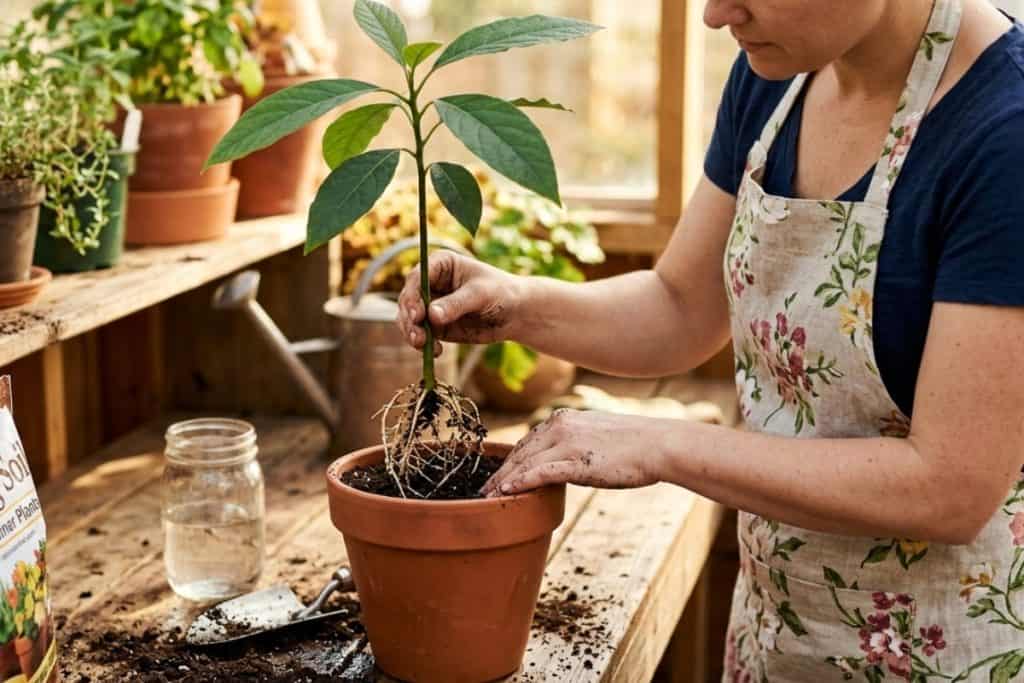
Once the pruned stem rebounds and reaches about 10 inches tall again, your avocado seedling is ready for its new home. This is where planting an avocado seed in soil really begins to pay off.
Keep your soil healthy and free from unwanted plants — learn how to safely protect your garden with homemade weed killers.
6 Transplanting Steps:
- Choose a 10 to 12-inch pot with drainage holes at the bottom. Avocados are highly susceptible to water mold, and waterlogged soil is the primary cause.
- Fill the pot with a well-draining, high-quality potting mix. Cactus and citrus mixes available at most garden centers also work very well for avocados.
- Dig out a hole that is big enough to hold the root system, remove the toothpicks, and put the plant in the hole you made. Keep the pit at the same level it was in the glass.
- Firm the soil around the roots so they are in contact with the soil. Handle the roots carefully.
- Water the pot until water runs freely from the drainage holes
- Fertilize after 2-3 weeks when the plant is growing again
Step 5: Avocado Tree Care and Maintenance
Now that your avocado seedling is in its pot, it’s time to focus on avocado tree care, creating the ideal conditions for steady, healthy growth. Here is a breakdown of every care element your avocado tree needs.
Watering
Avocados want consistent moisture, but they don’t want to stay wet. Use your finger to check for moisture in the top 1 inch of the soil. If the soil feels dry to the touch, then water it until water is running out the bottom. However, never let the pot sit in a saucer of standing water.
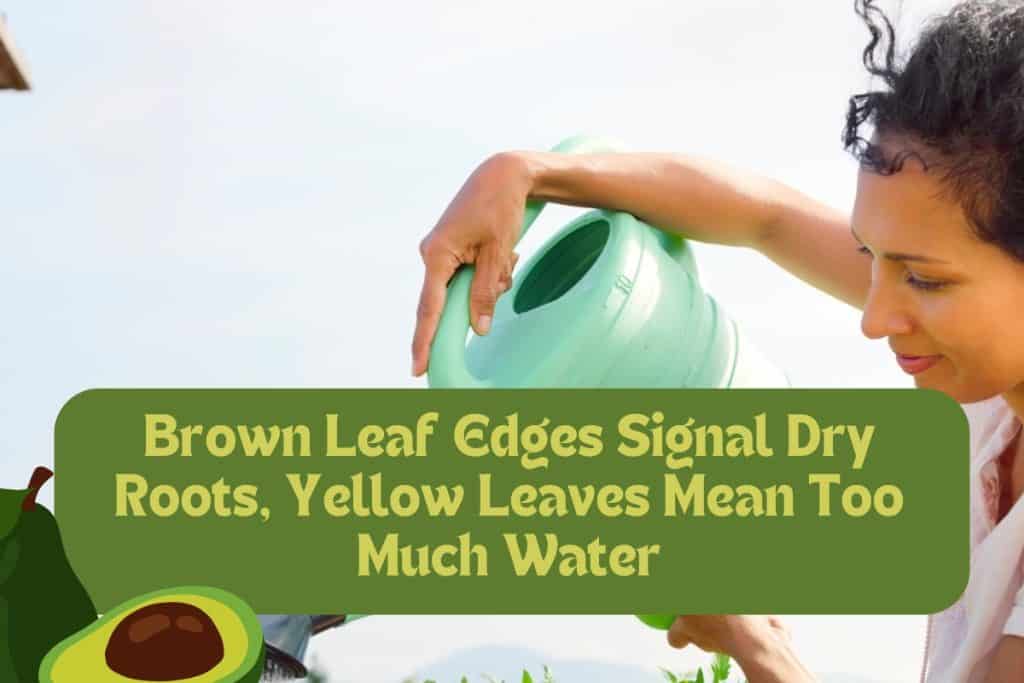
If the leaf edges are turning brown or curling, it signals under-watering. Dry roots are using suction to pull water away from the leaves above.
If leaves are turning yellow from the bottom up, it is a sign of over-watering. The roots are basically drowning.
If you see white, crusty deposits on the soil surface, these are mineral salt deposits from your water or fertilizer. Flush the soil thoroughly with plain water every few months to clear it, and consider switching to a lower-mineral water source.
Sunlight
Indoor avocados prefer bright, direct sunlight, ideally 6 or more hours per day. A south or west-facing window will be your best choice for growing indoors. If the plant growth is thin and sparse or it is bending towards the window, that is a sign of insufficient light, and the plant needs to be moved.
If freezing isn’t a risk, moving the plant outside whenever possible lets it generate energy more easily and grow much faster.
Ongoing Pruning for Fullness
Every time your avocado main stem grows another 6 inches, we need to pinch off the top two sets of leaves. This is called apical pruning, which triggers lateral bud break, creating a fuller canopy. New lateral shoots should appear within a week or two after each pinching.
Fertilizing
Apply balanced, water-soluble fertilizer (6-6-6 NPK) every 3 months. Every few months you should water heavily to drench any accumulated salts from the soil. An occasional application of calcium and magnesium every few months can make a noticeable difference to the overall health and color of your tree.
Pest Management
Avocado seedlings grown indoors are generally quite pest-resistant, but they can occasionally attract spider mites, aphids, thrips, and scale insects. Insects hide underneath leaves, so inspect the undersides of leaves regularly. These indoor pests can be controlled without using pesticides.
For mild infestations, wipe the insects off with a damp cloth. If insect problems persist or get out of hand (visible spider mite webs), apply diluted horticultural oil or neem oil with a drop of dish soap.
Neem is a natural insecticide from the neem tree. Horticultural oil is plant-based and smothers eggs and suffocates adult pests. The oils will also control some fungal diseases. The dish soap will help the spray stick to the leaves and dry out the skin of the insects.
Step 6: Repotting Your Avocado Tree
You’ll see the top of the plant growing, but it’s also developing a strong root system at the same time. Repot your tree every 1–2 years, moving it up to a pot size 2–4 inches larger in diameter.
Key signs it’s time to repot include:
- Roots emerging from drainage holes
- Soil drying out very rapidly after watering
- Slowed or stunted growth
6 Steps to Repotting Your Avocado Plant
- Put a few inches of soil in your new pot.
- Set your old pot into your new pot just so you can see how much more soil you need to add so that your plant will end up about an inch below the rim of the new pot.
- Remove your old pot and adjust the soil in the bottom of the new pot as needed.
- Remove the plant from the old pot. If the roots are circling the pot, then pull them out straight and lightly trim if needed.
- Put it into the new pot, then fill in the sides of the pot with the new soil.
- Water well and apply some fertilizer on top if your potting mixture does not already have fertilizer in it.
Winter Avocado Tree Care
Avocados are tropical and cannot tolerate even light frost. As soon as outdoor temperatures begin dipping below 45°F, bring your tree indoors if you’ve had it outside for the summer. If you live in hardiness zones 9–11, your avocado should be able to live outdoors year-round most years.
Additional Winter Tips:
- Place in a south-facing window during the winter months
- Use a humidity tray (a shallow tray filled with pebbles and water placed beneath the pot) to raise the humidity
- Reduce water and fertilizer in fall and winter because plant growth naturally slows
Great Expectations For Indoor Avocados
When Will My Avocado Tree Produce Fruit?
This is the most common question people ask, and the honest answer is: it takes a very long time, and fruit isn’t guaranteed.
Avocado trees grown from seed (like ours) typically take 5 to 13 years just to reach the flowering stage. Even then, getting fruit from an indoor, pot-grown tree is unlikely without a bit of extra help.
Avocado Tree Reproduction
Avocado flowers are unusual in that each flower acts as female first, then switches to male (flowers with pollen) — but never both male and female at the same time. It is possible for an avocado to self-pollinate, but the chances are slim. This makes it very difficult for the tree to pollinate itself, especially indoors where there are no bees or wind to help.
Avocado trees come in two types — Type A and Type B — based on how their flowers behave. For example, Hass and Reed are Type A (female in the morning, male in the afternoon). Fuerte and Zutano varieties are Type B (male in the morning, female in the afternoon).
Having one of each type of tree gives the flowers the best chance to pollinate each other. Even so, it’s still not a sure thing. Remember, our seedlings are one-of-a-kind, not specific varieties, so we can’t know what type of flowers it will have.
Improving Your Odds For Pollination
Improve your odds by moving your tree outside during flowering season so bees can move the pollen naturally. Gently shaking your tree when it’s flowering can also help. If you can, position a second avocado tree nearby to increase your chances.
The process of starting and growing your tree will be rewarding, but you may never see it fruit. If fruit production is your primary goal, consider learning to graft a proven fruiting variety onto your seedling rootstock. This can reduce the time to fruit by several years and guarantees the type of fruit the plant will produce — for example, grafting a piece of a Hass tree results in Hass fruit.
Pro Tips to Take Your Avocado Plant Growing to the Next Level
Before we wrap up, here are a handful of advanced tips straight from the horticultural playbook. The kind of tips that separate thriving avocado trees from merely surviving ones.
- Test and adjust your soil pH. Avocados are fussy about soil chemistry. Ideal soil pH for an avocado tree is between 5.5 and 6.5. Pick up an inexpensive soil pH test kit and, if needed, add a small amount of sulfur to bring the pH down, or lime to bring it up.
- Use your avocado outdoors as a summer feature plant. If you live in a climate with cold winters, move your plant outdoors. Use the opportunity to accelerate growth and produce a tougher, more resilient plant.
- Group plants together for humidity. Avocados prefer humidity levels of around 50–60%. Grouping your avocado with other houseplants creates a naturally more humid microclimate.
Frequently Asked Questions
What Environments Do Avocado Trees Prefer?
They originate from Mexico and Guatemala, where they thrive in warm temperatures, bright sunlight, and well-draining soil. This means they can’t withstand freezing temperatures. They grow close together in groves, so the humidity is high and their bottom foliage is shaded.
Is The Seed Pit A Clone?
When you grow an avocado from a seed pit, you are not growing a clone (exact replica) of the original parent tree. Commercially sold avocados (like Hass) are grafted varieties. Workers cut off a piece of a fruiting variety and graft it onto a rootstock seedling. When you plant a pit, the resulting tree will have its own unique genetics, a one-of-a-kind plant.
How Long Does Germination Take?
Germination can take from 2 to 8 weeks. Growing a tree that eventually fruits can take 5 to 13 years. If your goal is to produce avocados for your California backyard, waiting may pay off. If you want to grow a lush indoor plant, you will soon see rewarding results.
Final Advice
Growing an avocado tree from a seed pit is one of those simple projects that requires very little material and gives back so much.
As a horticulturist, I can tell you that some of the most enthusiastic and dedicated plant lovers I’ve ever met started their journey with nothing more than an avocado pit balanced on a glass of water. It’s a project that hooks you — and once you’re hooked, it is hard to go back.
So the next time you slice open an avocado for guacamole, don’t toss that pit in the bin. Clean it off, grab a few toothpicks, and find yourself a sunny spot on the windowsill. Something extraordinary is waiting to happen.
Let’s get growing!
References
- UC Avocado Guide: Starting avocados from seed
- UF Avocado Seed: Seed germination tips
- UCR Avocado FAQs: Growing from seed vs grafted
- Growables Propagation: Propagation basics
2 thoughts on “6 Steps to Grow an Avocado from Seed (Beginner’s Guide)”
I live Central Florida, when can I plant my tree into the ground?
Depending on where you are in Central Florida, you are in Zone Zone 9b or 10a. Last Frost Dates are (9b): February 6 to March 1.
Zone 10 (10a): January 1 to January 31. So you can plant it anytime now.